A full hour, one-on-one
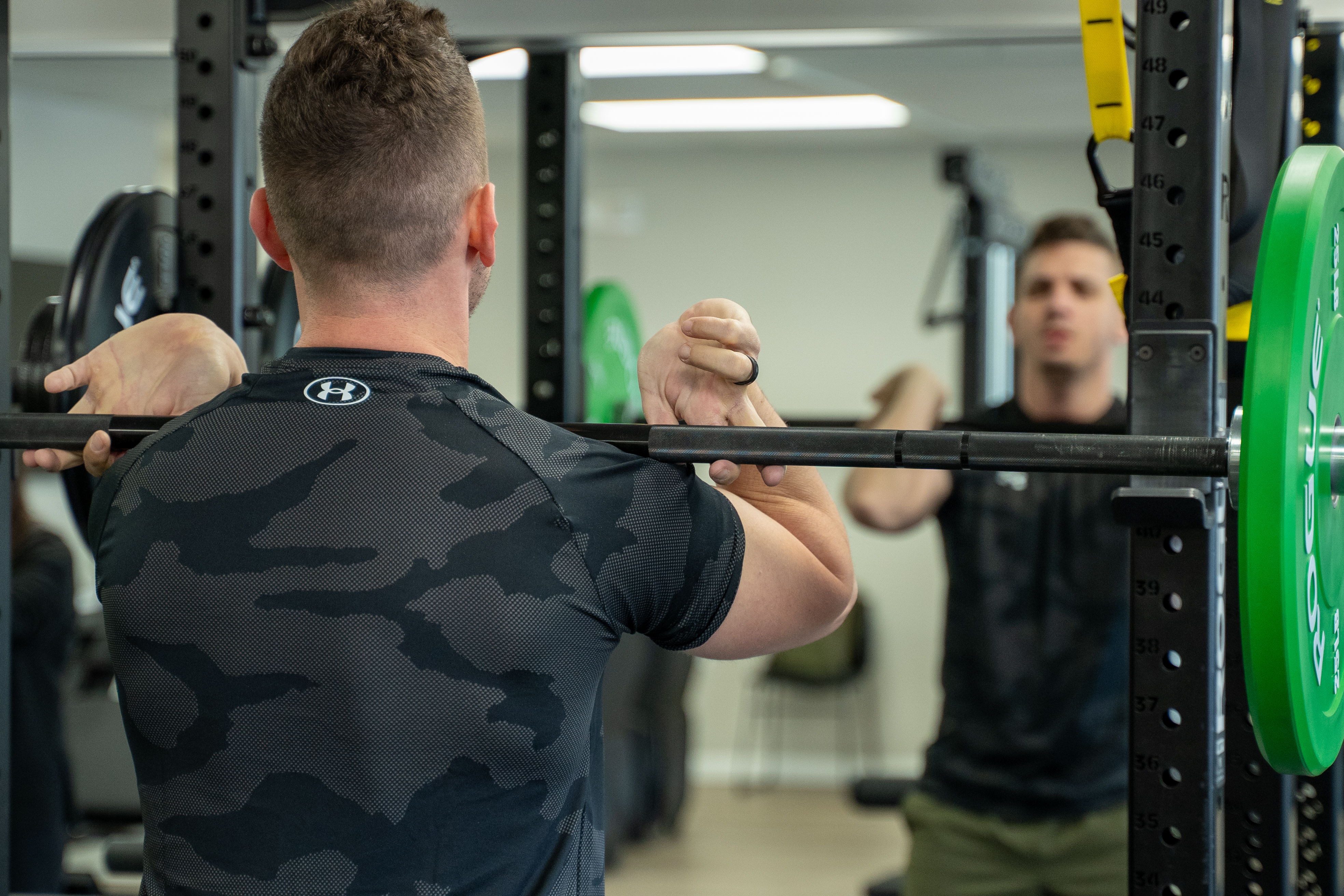
Every session is an hour with a Doctor of Physical Therapy. No aides, no rushed table time, no bouncing between machines.

You went over on it a while back. It swelled, you walked it off, and it mostly settled. But it never felt like your ankle again.
It rolls on uneven ground, aches after you’ve been on it all day, or just doesn’t feel like something you can trust when you plant and go.
Here’s the thing: it’s usually not bad luck. It’s that the ankle never got rebuilt after that first sprain, so the control and strength it lost never came back.
Most ankle care stops the day you can walk again: rest, ice, maybe a brace, and you’re sent off.
The problem is that a sprain wipes out the balance, strength, and joint control that keep the ankle stable, and none of that comes back on its own. If it’s never retrained, the ankle keeps turning, and every roll makes the next one more likely.
The way out isn’t more rest. It’s rebuilding what the ankle can sense and handle, so uneven ground stops being a threat.
We do not guess, and we do not hand you a sheet of exercises. Every recovery follows a proven progression, from calming the sprain to rebuilding the control that keeps it steady, so you always know where you are and what’s next. Each step has to be earned before you move on.
Calm pain, swelling, and protective muscle guarding so the area can heal.
Restore range of motion and get the joint moving freely again.
Rebuild strength in the muscles right around the injury.
Retrain control, proprioception, and coordinated movement.
Build the endurance to handle repeated, everyday loads.
Progress to full-body strength beyond the injured area.
Train landing and decelerating so you can absorb force safely.
Develop power and explosiveness for real-world demands.
Progress running gradually with clear, tested milestones.
Complete return-to-sport testing and clearance with confidence.
The 10 steps are the map. These four things are how we run it, and why our clients get an ankle that finally holds up.
Every session is an hour with a Doctor of Physical Therapy. No aides, no rushed table time, no bouncing between machines.
We find what is actually driving your pain: how you move, your strength, your load tolerance. No guessing from the spot that hurts.
You progress by hitting real, measured milestones, so you know your ankle is actually getting stronger, not just hoping it is.
Your plan, your progressions, and a line to your clinician live in the EVO app, so you are never guessing between sessions.
Tap the one that sounds like you.
Whatever it looks like, the approach is the same: find the cause, rebuild the control, keep it from coming back.
Rebuilding an ankle with active rehab instead of just resting it isn’t our preference, it’s where the evidence points.
A systematic review of randomized trials found that exercise-based rehab after an ankle sprain roughly halved the odds of spraining it again within 7–12 months, compared with standard rest-and-protect care.
A controlled trial of a balance-training program found it reduced ankle-sprain recurrences, with the benefit concentrated in people who’d already sprained before.
That’s the whole reason we don’t stop at “you can walk on it.” Rebuilding balance and control is what separates an ankle that holds from one that keeps turning.
Studies located via PubMed.
The same progression our clinicians use to take an ankle from sprained to steady. Yours free. Just tell us where to send it.
A free discovery call is a short conversation to make sure we are the right fit and to map out your next step. No commitment, no pressure.
Book a Free Discovery Call →